
Opening Ceremony of the Underground Energy Storage and Recovery Conference at Semnan University
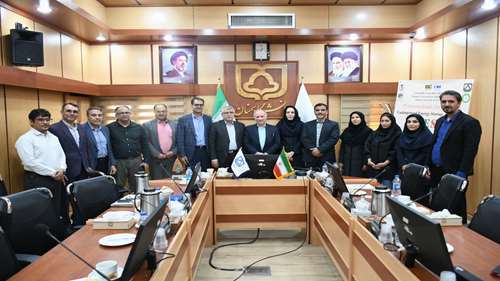
First International Conference on Underground Energy Storage and Recovery Kicks Off at Semnan University in Collaboration with Sharif University of Technology.
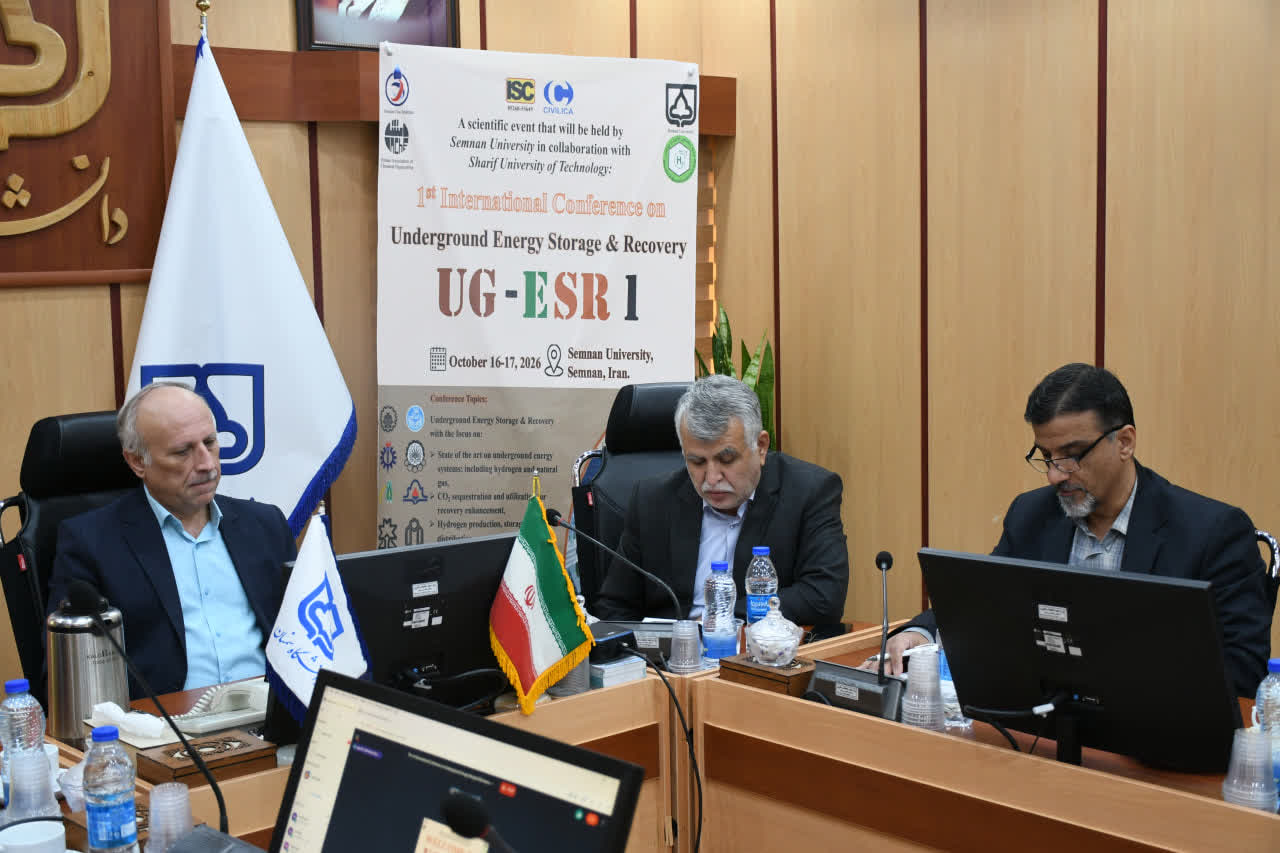
According to the Public Relations Department of Semnan University, Dr. Masoud Nasiri Zarandi, President of Semnan University, announced that the International Conference on Underground Energy Storage and Recovery commenced today, Friday, October 16 (Mehr 24), at Semnan University for a two-day event. He stated that today, the rapid transition toward low-carbon energy systems and the strategies adopted by various countries in this field have highlighted the urgent need for large-scale, long-term energy storage solutions, making it imperative to address them.
Speaking at the opening ceremony, Dr. Masoud Nasiri Zarandi, Secretary-General of the Conference, remarked: “The global energy system is undergoing a profound transformation. Rising energy demands, energy security concerns, the rapid growth of renewable energies, and the imperative to reduce greenhouse gas emissions present new challenges for energy generation, storage, and utilization. Solar and wind energy are foundational components of the energy transition. However, their availability fluctuates with weather conditions and time. Consequently, efficient energy storage and recovery when needed are gaining critical importance. The future of energy depends not only on how it is generated, but also on how effectively it is stored, retrieved, and utilized when and where required. Underground energy storage and recovery can make a significant contribution to energy security and the development of more resilient and sustainable energy systems. Nevertheless, achieving this goal requires scientific rigor, technological innovation, international collaboration, and responsible decision-making. Underground energy storage offers promising opportunities to address these challenges. Geological formations can potentially provide massive storage capacities and, depending on their characteristics and intended applications, support long-term and seasonal energy storage.”
Dr. Nasiri further added: “Depleted oil and gas reservoirs, deep salt formations, and suitable salt caverns may offer opportunities for storing natural gas, hydrogen, and other energy carriers. Underground thermal energy storage and compressed air energy storage are also vital areas for scientific research and technological development. However, successful underground storage requires far more than merely identifying a suitable geological formation. We must thoroughly understand fluid-rock interactions, multiphase flow, reservoir behavior, geomechanical integrity, leakage risks, environmental impacts, and the economic feasibility of each project. These challenges demand close collaboration among geoscientists, engineers, environmental researchers, data scientists, economists, and policymakers. Iran possesses significant oil and natural gas resources, substantial expertise in subsurface engineering, and diverse geological formations that may offer opportunities for underground storage. Suitable salt formations and depleted hydrocarbon reservoirs deserve rigorous scientific and technical evaluation for potential storage applications. Nonetheless, realizing this potential requires reliable geological data, advanced modeling, empirical research, appropriate monitoring systems, and rigorous safety and environmental assessments.”
Associate Professor of Chemical Engineering at Semnan University also stated: “Universities play a fundamental role in this process. They must enhance scientific understanding, train skilled professionals, support innovation, and strengthen university-industry-government collaboration. Semnan University, as a major academic institution, is proud to support scientific dialogue and cooperation in this vital field. The main objective of this conference is to provide a platform for exchanging scientific knowledge, discussing emerging technologies, identifying research priorities, and establishing new collaborations.”
Subsequently, Dr. Abdi, serving as the Scientific Secretary of the conference, stated at the opening ceremony: “The slogan of the conference is: (Managing Uncertainty, Enabling Underground Energy Storage, and Advancing Net-Zero Goals).”
Referring to this slogan, Dr. Abdi further added: “The topic of underground energy storage and recovery has gained increasing importance within the context of global energy security, the transition toward low-carbon energy systems, and the growing demand for reliable and flexible energy infrastructures. Bringing together researchers, engineers, industry experts, and policymakers provides a valuable opportunity to exchange knowledge, discuss emerging challenges, and explore innovative solutions in this critical domain. We are honored to host a group of distinguished keynote speakers whose expertise and research achievements will provide valuable insights into the latest developments, scientific challenges, and future prospects of underground energy storage and recovery. Their speeches will address key aspects of this field and create a platform for dialogue among participants from diverse academic and professional backgrounds. These speakers are:”
Dr. Azim KalantariAsl (President of the Research Institute of Petroleum Industry - RIPI) – Topic: Energy Basket, Oil Industry Experiences, and Future Scenario Planning.
Dr. Shahin Kord (Vice President for Research and Technology, Petroleum University of Technology) – Topic: The New Era of Petroleum Engineering; Enhanced Oil Recovery (EOR/IOR) and Carbon Capture (CO2).
Dr. Abbas Rouhi (President of the Iranian Rock Mechanics Society) – Topic: The Importance of Rock Mechanics and Wellbore Stability in Reducing Drilling Costs.
Dr. Mohammad Enayatzadeh (Vice President of the Oil Industry Technology and Innovation Park) – Topic: Addressing Iran’s Energy Imbalance: Utilizing Underground Storage Capacities through Targeted R&D and University-Industry Synergy.
In addition to the keynote speeches, the conference program includes specialized workshops designed to facilitate focused technical discussions, knowledge sharing, and interaction among experts and participants. These workshops enable us to explore selected topics in greater depth and discuss practical approaches to addressing current scientific and engineering challenges. The speakers for these sessions are:
Dr. Ali Kadkhodaie (Professor of Petroleum Geology / Petrophysics, University of Tabriz) – Topic: Integrated Geological and Economic Evaluation and Prioritization of Salt Structures for Underground Natural Gas Storage in Northwest Iran.
Dr. Mehdi Parvini (Associate Professor of Chemical Engineering, University of Tabriz) – Topic: Process Safety Assessment of Underground Natural Gas Storage.
Regarding the schedule, the conference will proceed according to the program provided to the participants.
In his opening remarks, Dr. Ali Haghighi Asl, Dean of the Faculty of Chemical Engineering at Semnan University, stated: “Semnan University is proud to host guests from all over the world; a university which, according to statistics, has the highest student-to-population ratio in the country, reflecting the special status of science and knowledge in this region. This conference is organized with the participation of universities and institutions such as Semnan University, the Iranian Institute of Chemical Engineering, Sharif University of Technology from Iran, and Shandong University of China, alongside professors from the Chinese Academy of Sciences. As one of the country’s leading scientific centers, the Faculty of Chemical Engineering, Petroleum, and Gas at Semnan University has always advanced at the frontiers of knowledge, relying on the valuable competencies of its faculty members. Having commenced its activities in 2000 in the bachelor’s degree program in chemical engineering, this faculty now hosts students at the bachelor’s, master’s, and doctoral levels. By utilizing advanced laboratories and fundamental research, it has played a significant role in developing the country’s oil, gas, and petrochemical industries.”
He added: “From specialized groups in thermokinetics and catalysis, process design, separation, and petroleum exploration, to cutting-edge research in gas hydrates, nanotechnology, modeling, membrane processes, water and wastewater treatment, underground hydrogen storage, and enhanced oil recovery—all are dedicated to serving sustainable development and solving the challenges of the energy industry.”
Distinguished professor of Semnan University also pointed out: “Today’s world is facing complex and unprecedented challenges in the energy sector. The need for sustainable resources, carbon emission reduction, and the smart utilization of modern technologies has compelled us to turn to underground energy storage solutions. However, what doubles the importance of this issue is the current global landscape and the growing difficulties of gas transmission. Oil and gas pipelines, which were once the vital arteries of energy, are now facing geopolitical threats, international sanctions, natural disasters, and severe market fluctuations. Transporting gas from remote fields to consumer markets has transformed into a complex and costly equation. Under such circumstances, underground energy storage is no longer just a choice, but a strategic necessity. Storing natural gas in underground reservoirs enables us to guarantee energy security during peak consumption periods or disruptions in transmission routes. Hydrogen storage, as the clean fuel of the future, can reduce dependence on fossil fuels, while carbon capture and storage (CCS) helps mitigate pollution and enhances oil recovery from reservoirs. This is the exact path upon which the world is focusing today, and we must also pioneer this journey by relying on domestic knowledge and capabilities.”
Dr. Haghighi concluded: “To emphasize the significance of this conference, suffice it to say that its focal themes reflect the current and future needs of the energy industry. As the Dean of the Faculty of Chemical, Petroleum, and Gas Engineering, I am proud to announce that this event—leveraging the academic capacities of professors and researchers and relying on specialized laboratories and advanced equipment—is ready to take effective steps in this direction through collaboration with the global community. The capabilities of this faculty, spanning various disciplines to specialized laboratories, serve as a solid backing for hosting this scientific event. We believe that the synergy of knowledge and experience can turn major energy challenges into unparalleled opportunities.”
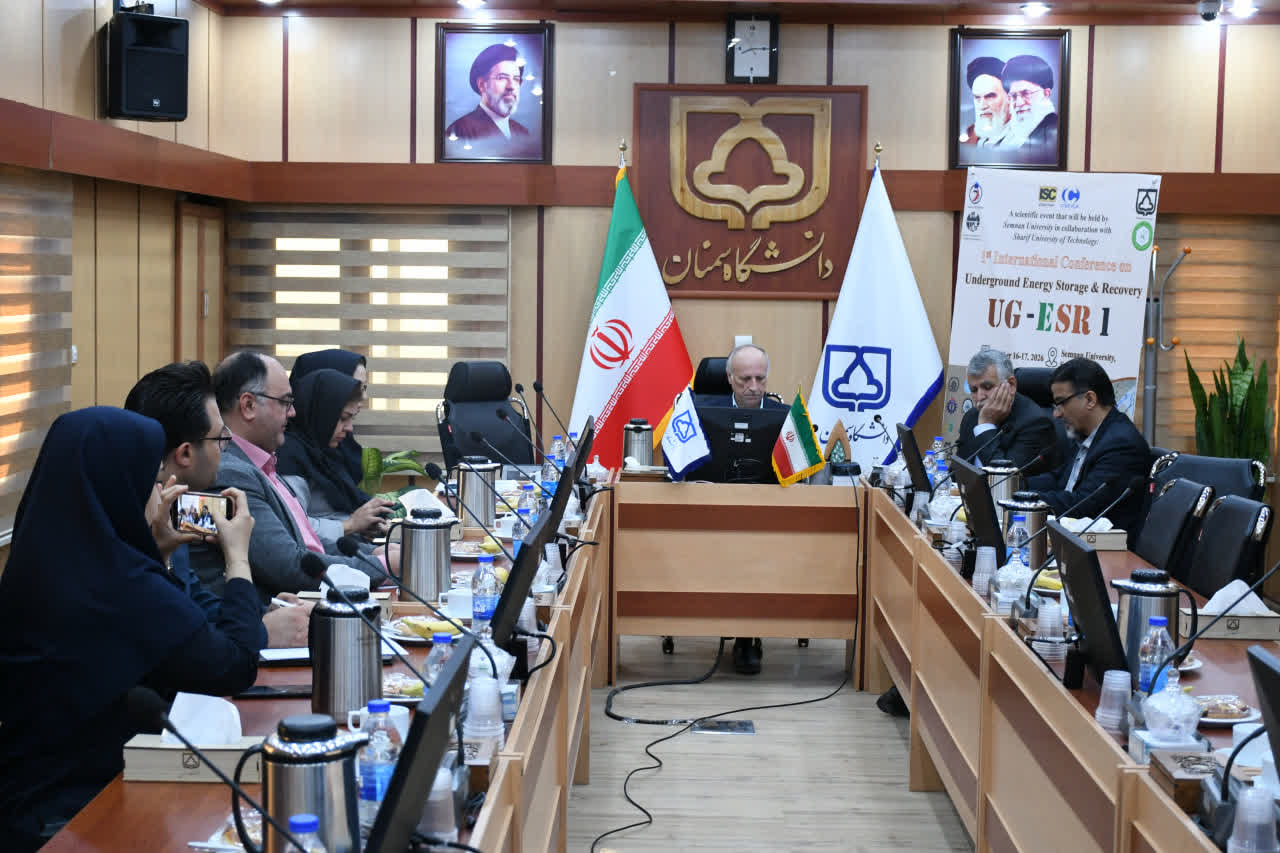
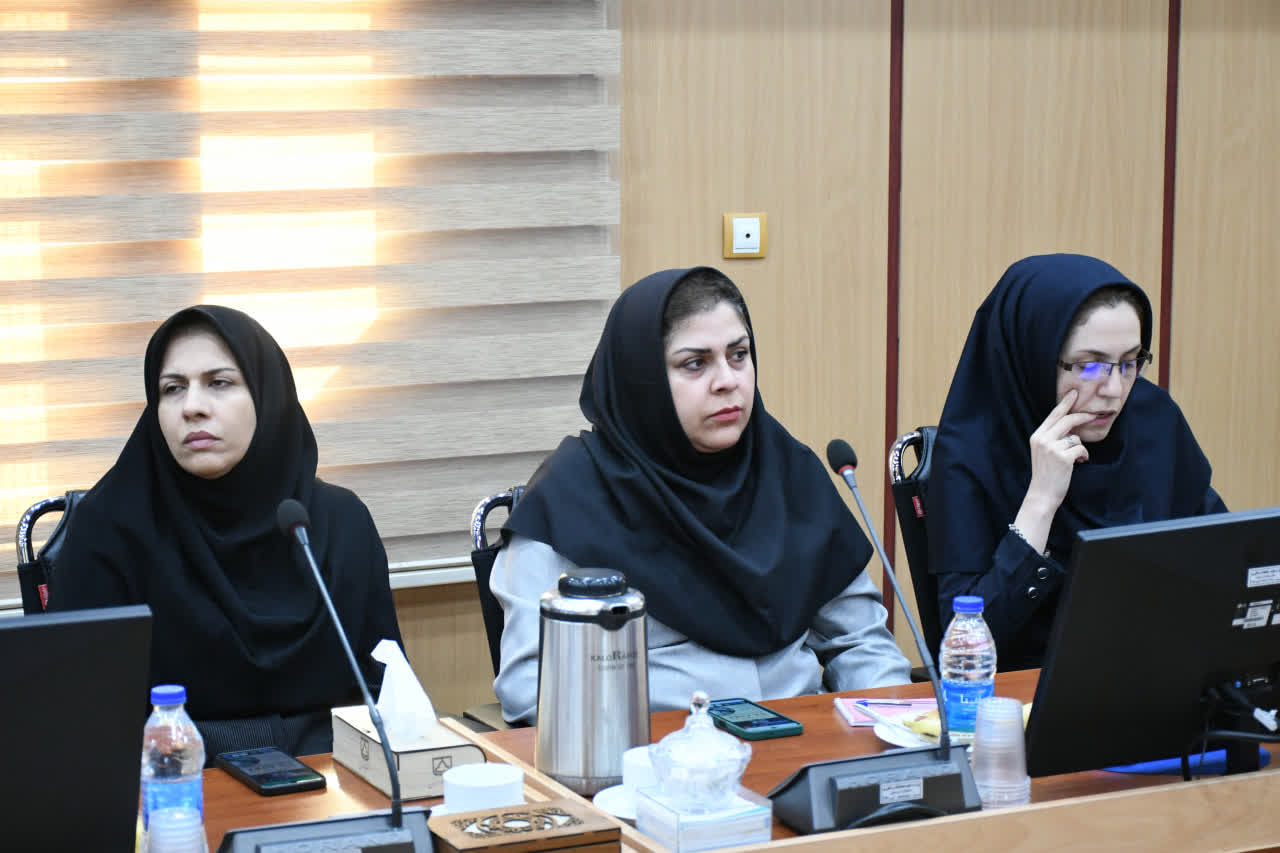
It is worth noting that with the presence of numerous petroleum and chemical engineering specialists in attendance, alongside a large number of participants joining virtually, the First International Conference on Underground Energy Storage and Recovery officially commenced at Semnan University at 8:00 AM on Friday, October 16, 2026 (Mehr 24, 1405). During this two-day event, in addition to numerous keynote speeches by experts, accepted scientific posters will be exhibited and discussed. Furthermore, a series of specialized workshops will be held throughout these two days.
comment